
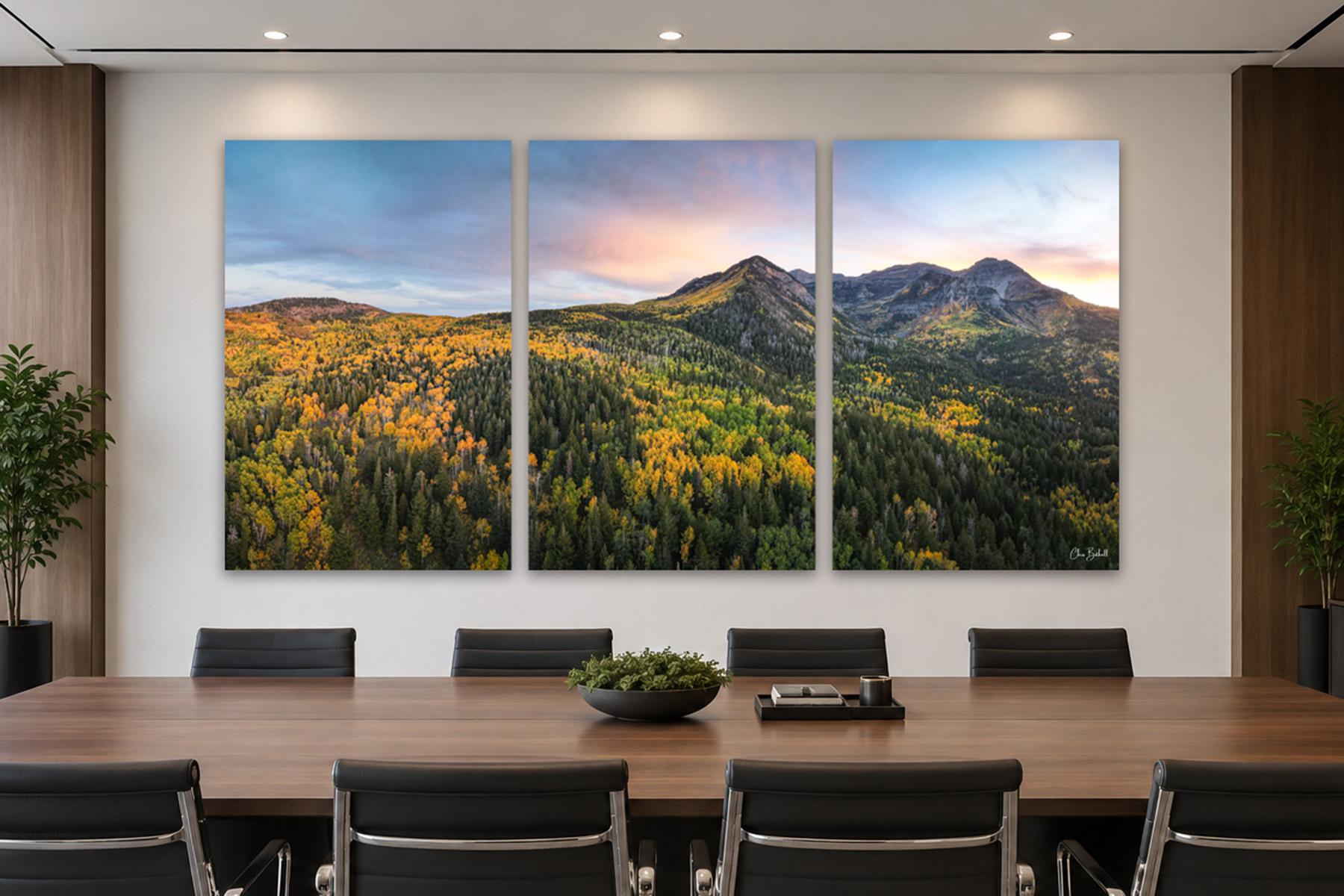
Three Panels. One Complete Image.
A triptych is a single photo presented across three separate panels. Rather than displaying one large print, the image is intentionally divided into three sections, creating a distinctive presentation that can add visual impact and dimension to a space.
Triptychs can be created from images specifically composed for a three-panel presentation, or from photographs that naturally lend themselves to being divided into sections. The three panels work together as one artwork while giving you the flexibility of displaying a large-scale piece in a way that feels balanced and intentional.
Why Choose a Triptych?
Create a Strong Visual Statement
Three panels can give a photograph a sense of scale and presence that a single print may not provide. The separation between the panels creates natural visual breaks, allowing the viewer's eye to move across the entire composition.
Triptychs can work especially well with photographs featuring wide expansive landscapes and other scenes with strong horizontal movement. Often a panorama image can look great as a triptych.
The result is more than simply three prints hanging next to one another. You get one cohesive artwork designed to be experienced as a whole.
Make a Large Artwork More Practical
There are situations where a single large print simply isn't practical. Very large prints can become difficult to transport, handle, install, or fit through doorways and other access points. Larger sizes may not even be possible to print as a single panel due to the limits of the printer itself.
Dividing an image into three panels can provide a solution.
For example, instead of creating one extremely large print, a triptych can divide the artwork into three more manageable pieces while still achieving an impressive overall size once installed.
This can be particularly useful for large walls, boardrooms, offices, entryways, living rooms, and other spaces where you want substantial visual impact.
Add Dimension and Interest
The space between each panel becomes part of the artwork. Rather than seeing one uninterrupted rectangle, the viewer experiences intentional breaks that can add rhythm and depth to the composition.
This can give a triptych a more contemporary, gallery-like appearance while allowing the wall itself to become part of the presentation.
How Much Space Should Be Between the Panels?
The spacing between panels can have a significant effect on the overall appearance.
As a general recommendation, I suggest leaving approximately 1–3 inches between panels, depending on the overall size of the artwork and the look you're trying to achieve.
For smaller triptychs, a narrower gap often feels natural. As the panels become larger, a slightly wider separation can help maintain visual balance.
The most important consideration is consistency. The three panels should be carefully aligned and spaced so that they read as a single intentional artwork.
If you're unsure what spacing or overall dimensions would work best in your space, I can help you determine an appropriate configuration.
When Should You Consider a Triptych?
A triptych may be a great option if:
- You have a large wall that needs a substantial piece of artwork.
- You want the impact of a very large photograph without having one enormous panel.
- You like a modern, gallery-style presentation.
- Your space has a wide horizontal area, such as a living room, office, conference room, or entryway.
- You want to create a focal point that draws the viewer across the entire wall.
- A particular photograph has a composition that naturally lends itself to being divided into three sections.
- Access, transportation, or installation makes one extremely large print impractical.
- You want a size bigger than what is offered in a given medium.
Designed as One Artwork
A triptych isn't simply a photograph cut into three pieces. The composition, panel proportions, spacing, and final dimensions should all work together to create a cohesive presentation.
If you're interested in a triptych, contact me before ordering. I can help determine whether a particular image will work well as a three-panel piece and recommend dimensions based on the wall or space where you plan to display it.
Triptychs are available in select print mediums and can be created in a variety of overall sizes. For particularly large installations, dividing the artwork into multiple panels may allow you to achieve a scale that would otherwise be difficult to produce or install as a single print.